The definitions
Upskilling
Deepening skills someone already uses, so they get better at their current role. A practitioner becomes advanced.
Reskilling
Training someone for a different role, usually because their current one is changing or disappearing.
Cross-skilling
Teaching someone a neighbouring skill so they can cover a colleague. Also called cross-training.
Examples
| Example | Typical driver | |
|---|---|---|
| Upskilling | A support engineer moves from practitioner to advanced in Microsoft 365 administration and gets certified. | New technology, higher standards, career progression |
| Reskilling | A manual data-entry clerk retrains as a finance systems analyst after the process is automated. | Automation, restructuring, a declining role |
| Cross-skilling | A finance assistant learns to run payroll so it no longer depends on one person. | Single points of failure, absence cover, flexibility |
Which should you use?
- Upskill when the role is staying the same but the bar is rising, or when someone is ready for more responsibility.
- Reskill when a role is shrinking and another is growing. It's usually cheaper and better for morale than redundancy plus hiring, and you keep people who already know the business.
- Cross-skill when a critical task depends on one person. It's often the fastest, cheapest win in a skills gap analysis, because the expert is already in-house.
How a skills matrix helps you choose
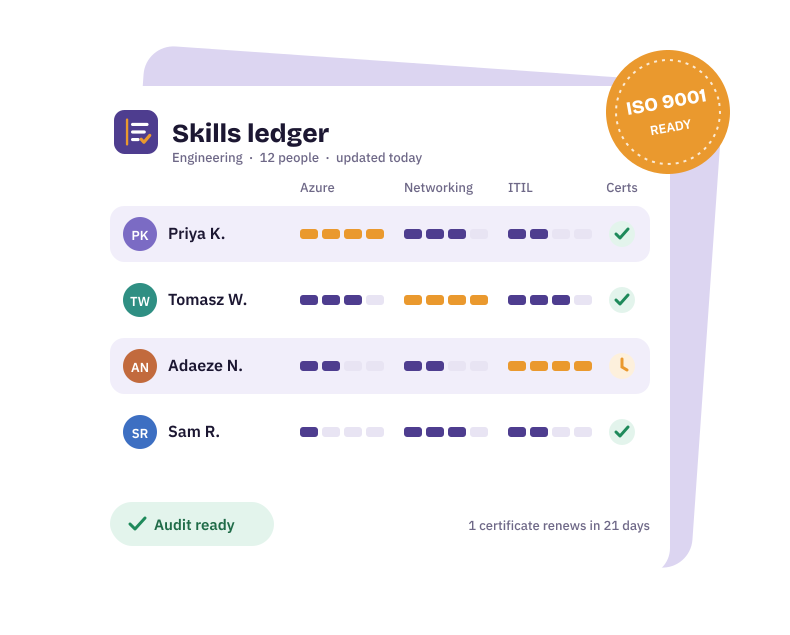
A skills matrix makes each option visible:
- Upskilling candidates are people already at level 1 or 2 in a skill you need more of, especially if they've said they want to develop it.
- Cross-skilling needs show up as columns with only one person at practitioner level or above.
- Reskilling candidates are people whose current skills overlap with a growing role, which you can spot by comparing their row with that role's required skills.
Making it stick
- Tie training to a measured gap, not a catalogue of courses.
- Give people time to practise. A course without on-the-job use fades fast.
- Re-rate afterwards to check the training actually moved the level.
- Track certificates gained through the programme, with their expiry dates.
Spot the candidates automatically
In SkillsLedger, people can flag skills they'd like to develop, objectives track progress towards the levels you need, and the org overview shows your weakest skills by department. See skills matrix software.