The short answer
A skills matrix rates specific, learnable abilities: can this person configure a firewall, run month-end, operate the press brake? A competency matrix rates broader capabilities that combine skills, knowledge and behaviours: does this person solve problems well, lead a team, manage stakeholders?
Put simply, skills are what someone can do. Competencies are how well they apply what they know in the role.
Side by side
| Skills matrix | Competency matrix | |
|---|---|---|
| Measures | Specific, practical abilities | Broad capabilities: skills plus knowledge and behaviours |
| Examples | PowerShell, VAT returns, CNC lathe | Problem solving, leadership, customer focus |
| Evidence | Observation, tests, certificates | Behavioural examples, reviews, 360 feedback |
| Changes | Often, as tools and tech change | Slowly; tied to roles and values |
| Best for | Training plans, cover, resourcing, compliance | Role profiles, career paths, performance frameworks |
| Typical owner | Team leads and operations | HR and leadership |
An example: a software developer
In a skills matrix, a developer might be rated on Python, SQL, Docker and automated testing. In a competency matrix, the same developer is rated on technical problem solving, code quality and collaboration, each of which draws on several of those skills plus judgement and behaviour.
The skills tell you who can pick up a Docker task tomorrow. The competencies tell you who is ready for a senior role.
Which one do you need?
- Choose a skills matrix if your questions are operational: who can cover, who needs training, are certificates current, can we staff this project?
- Choose a competency matrix if your questions are about roles and progression: what does "good" look like at each grade, who is ready for promotion?
- Use both if you're evidencing competence for ISO 9001 or a regulator. Auditors usually want to see the specific skills and certificates behind each role, not just a behavioural rating.
Combining them in one matrix
In practice many organisations keep one matrix with categories: technical skills, certifications and behavioural competencies side by side, each rated against a scale that suits it. The key is that every level has a clear description, so a rating means the same thing whether it's a skill or a competency. Our guide to competency frameworks covers how to write those level descriptions.
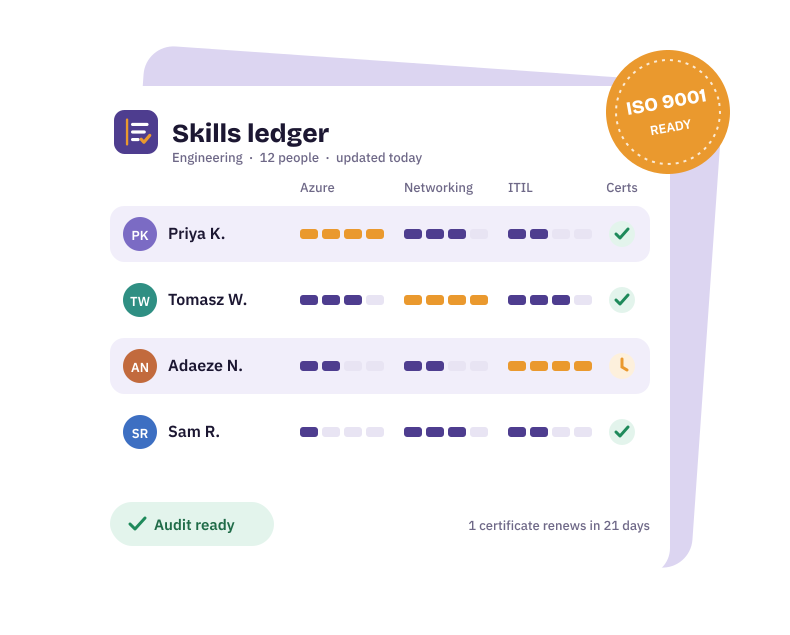
Skills are organised into skill groups per team and categories within them, so technical skills, certifications and behavioural competencies can live in one matrix, each team rated on what it actually needs. See how it works.