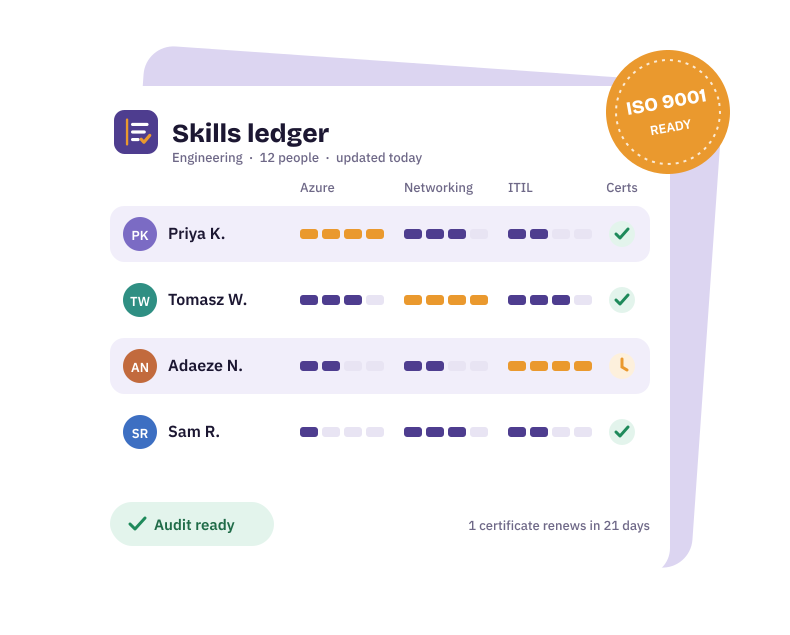
1. Decide what the matrix is for
Start with the decision it needs to support. Common reasons are planning training, covering for absence, staffing projects, meeting a partner programme's certification quota or evidencing competence for ISO 9001. The purpose decides which skills you include and how much detail you need.
2. Choose the skills, per team
Resist one giant list. Group skills by team or role (Engineering, Customer Support, Operations) so each person only rates what's relevant to them. For each group, aim for the 10 to 25 skills that genuinely affect the work. Include:
- Technical skills such as tools, systems and methods;
- Certifications and tickets that expire, like first aid or vendor certifications;
- Behavioural skills where they matter to the role, such as communication or leadership.
3. Define a rating scale
A short scale with clear descriptions beats a long one. A widely used 0 to 4 scale:
| Level | Name | Meaning |
|---|---|---|
| 0 | None | No knowledge or experience yet. |
| 1 | Aware | Understands the basics; needs guidance. |
| 2 | Practitioner | Does the work independently to the expected standard. |
| 3 | Advanced | Handles complex cases; reviews others' work. |
| 4 | Expert | The go-to person; can train and assess others. |
For certifications, a simple "held / not held" plus an expiry date works better than a level.
4. Collect honest ratings
Self-rating followed by manager review gives the best balance of effort and accuracy. People know their own work; managers correct optimism and modesty. Explain that the matrix is for planning, not performance management, or ratings drift upwards.
5. Track certificates with expiry dates
Record the expiry date for every certification and review what's due regularly. Start renewals weeks out, not days. Courses book up.
6. Turn gaps into a plan
For each important skill, set a target such as "three people at Practitioner or above". Compare it with the current count, and the difference is your gap. Prioritise the gaps that carry the most risk, like single points of failure or expiring certificates, and turn each into a training action with an owner and a date.
7. Keep it current
A matrix is only useful if it's trusted. Review ratings at least twice a year and after any training. When the matrix spans several teams, expiry dates multiply and one person can no longer maintain the file, that's the point to move from a spreadsheet to software.
Our free skills matrix template includes this rating scale, a certificate tracker and an automatic gap summary.